


Tangshan Solvents Trading Co.,Ltd was established in 2009 and located in China-Tangshan City, Hebei province. We are the exclusive agency of Shandong Wells Chemicals Co.,Ltd for export business, and also establish a long-term and stable cooperative relationship with many other chemical manufacturers in Shandong, Jiangsu provinces. Our factory covers 160,000 sq. m., and it holds 1 billion Yuan RMB of total assets. At present, there are 150 employees, more than 70 of which have college degree or above, 20 are senior engineers, and 30 are senior technicians.
Rich Product Variety
Our main products are series of Carbonates, such as: Propylene Carbonate, Dimethyl carbonate,Diethyl Carbonate, Propylene Glycol etc.;Solvents for Lithium battery such as battery grade of Propylene Carbonate, Ethylene Carbonate, Dimethyl Carbonate, Ethyl Methyl Carbonate,Diethyl Carbonate, Methyl propyl carbonate.
Wide Range of Product Uses
Our products are used in plastic industry, paint industry, lithium battery industry etc.
Production Equipment
At present, our group has more than 10 sets of processing lines which can produce more than 10 kinds of products. 100,000mt/per year of Propylene Oxide, 90,000mt/year of Propylene Carbonate, 5,000mt/year of Dimethyl carbonate together with 45,000mt/year of Propylene Glycol, 10,000mt/year of Sodium Methylate solution with Methanol, 10,000mt/year of DBE, 600,000mt/year MTP projects are in leading position in their area.
Leading Service
Our staff have many experience in technology and marketing .In order to keep competitive position still, Our products are sold to Europe, America, Japan, Korea and Southeast Asia and we have occupied the biggest domestic and abroad market share in these industries. Whether you want to buy Propylene Carbonate or Dimethyl carbonate, just send your requirements by email and we can customize the product for you.

Propylene Glycol (Industrial Grade)
Propylene Glycol (Industrial Grade) is a synthetic organic compound commonly used in industrial applications as a solvent, antifreeze, and coolant. It is derived from propylene oxide and known for its low toxicity, chemical stability, and high moisture-retaining properties, making it ideal for use in resins, paints, and various chemical processes.

Ethylene Carbonate is a highly polar organic compound used primarily as a solvent in lithium-ion battery electrolytes and chemical synthesis. It is a carbonate ester known for its high boiling point, excellent solvency, and ability to improve the performance of electrolytes. Ethylene Carbonate also finds applications in coatings, adhesives, and lubricants due to its chemical stability.

Dimethyl Carbonate (DMC) is a versatile, environmentally friendly solvent used in chemical synthesis, fuel additives, and lithium-ion battery electrolytes. It is a low-toxicity carbonate ester known for its excellent solvency, high biodegradability, and role as a green alternative to traditional solvents in coatings, adhesives, and cleaning agents.

Diethyl Carbonate (DEC) is a low-toxicity, biodegradable organic solvent used in the production of pharmaceuticals, coatings, and electrolytes for lithium-ion batteries. It is a carbonate ester known for its excellent solvency, high volatility, and eco-friendly profile, making it an ideal choice for chemical synthesis, fuel additives, and various industrial applications.

Methyl Propyl Carbonate (MPC) is a carbonate ester used as a solvent in various chemical processes, coatings, and cleaning agents. Known for its low toxicity, good solvency, and biodegradability, MPC is often employed in applications requiring environmentally friendly solvents, including in lithium-ion battery electrolytes and organic synthesis.

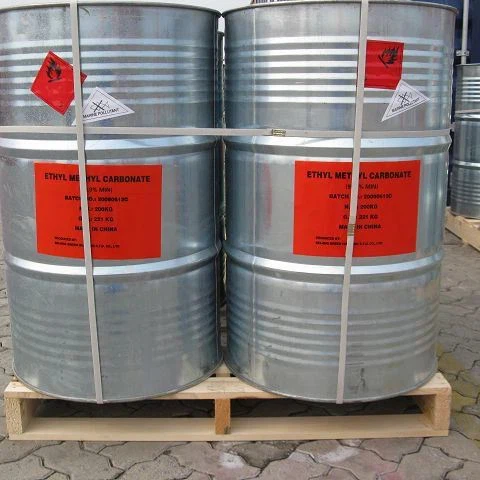
Ethyl Methyl Carbonate (EMC) is a carbonate ester primarily used as a solvent in lithium-ion battery electrolytes. It is valued for its low viscosity, high dielectric constant, and good chemical stability, which enhance electrolyte performance. EMC is also used in coatings, adhesives, and chemical synthesis due to its efficient solvency and eco-friendly properties.

Relative molecular weight: 102.09
CAS NO.: 108-32-7
Appearance: Colorless or pale yellow transparent Liquid
What Is Ethyl Methyl Carbonate
Ethyl methyl carbonate (EMC) is a low viscosity solvent, generally prepared by the esterification of chloroformate with ethanol.
Features of Ethyl Methyl Carbonate
Ethyl methyl carbonate (EMC) is an asymmetric aliphatic organic carbonate. It is a colorless transparent liquid widely used as an excellent solvent for lithium-ion battery electrolytes.
EMC increases the solubility of lithium ions improving the capacity density and power of batteries. This compound has excellent thermal conductivity and low electrical resistance, extending the working temperature range of electrolytes, improving lithium batteries' safety, and prolonging their service life.
EMC is usually obtained by metal oxide-catalyzed transesterification over dimethyl carbonate and diethyl carbonate. High percentage yields are obtained if the reaction is carried out in liquid or vapor phase.
Ethyl Methyl Carbonate as a Cosolvent for Lithium-Ion Cells
Alkyl carbonates find applications as solvents for lithium ion battery electrolytes and the use of high quality battery grade electrolytes having extremely low water (<10 ppm) and acid (<10 ppm) contents are critical for achieving high electrochemical performance.
Methyl ethyl carbonate is an aprotic, polar, environmental organic solvent. It can be used as the electrolyte solvent for lithium ion battery because of its strong solubility to lithium salts. It can not only improve the battery's energy density and discharge capacity, but also has the characteristics of long cycle life, good safety performance, no memory effect, good low temperature performance and so on. It has been widely used in mobile phones, portable audio-visual equipment, laptops and other high-end electrical appliances. Currently, it is the most promising small secondary battery electrolyte solvent. Its advantages have been widely recognized by the industry.
Methyl ethyl carbonate contains methyl, ethyl and carbonyl reactive groups, which can react with alcohol, phenol, amine and ester, often used as an intermediate in organic synthesis. In addition, the asymmetry of its molecular structure makes it also has obvious advantages as solvents for paints, cellulose, resins, special fragrances and intermediates.
How to Choose Ethyl Methyl Carbonate


Purity
EMC is available in different purity levels, typically 98% and 99%. Higher purity EMC is crucial for sensitive applications such as battery electrolytes. For example, in lithium-ion batteries, impurities can negatively affect the electrolyte's stability and performance. Therefore, 99% purity is often recommended for these sensitive applications. On the other hand, for less demanding industrial applications, a 98% purity level may suffice.
Application
EMC is a versatile solvent used in various chemical reactions such as esterification and amidation. Its ability to act as a solvent in these reactions makes it valuable in the pharmaceutical and chemical industries. However, its most notable application is as a co-solvent in lithium-ion battery electrolytes, where it plays a pivotal role in enhancing energy density and discharge capacity. If your primary use of EMC is for battery production, selecting a high-quality product with consistent performance in battery electrolytes is essential. For industrial chemical reactions, the focus may shift to its solubility and compatibility with other reagents.
Physical Properties
Understanding the physical properties of EMC is essential to ensuring its suitability for your application. EMC has a boiling point of 101°C and a density of 1.006 g/mL at 25°C. These properties can affect its performance in various reactions and processes. For instance, the boiling point is crucial in applications where the solvent needs to be easily removed without breaking down or reacting with other chemicals. The density, on the other hand, affects its miscibility with other solvents and reagents.
Safety
Safety is always a top priority when handling chemicals, and EMC is no exception. EMC is a flammable liquid with a flash point of 23.9°C, meaning it can ignite easily under the right conditions. Proper storage and handling are essential to avoid accidents and ensure workplace safety. Ensure that your storage facility is equipped to handle flammable liquids, with temperature-controlled environments and appropriate ventilation. Additionally, always follow standard safety protocols, including wearing personal protective equipment (PPE) and having fire suppression systems in place. The safety of your workers and equipment should never be compromised, so it's crucial to ensure that everyone involved in handling EMC is trained in proper safety measures.
Supplier and Cost
The choice of supplier can significantly impact the quality and cost of EMC. Different suppliers may offer varying prices based on the quality, purity, and volume required. It's advisable to compare multiple suppliers and request samples to evaluate the EMC's performance in your specific application before making a bulk purchase. A reliable supplier with a track record of consistent quality and adherence to safety standards is worth the investment. Long-term relationships with suppliers can also lead to more favorable pricing and priority service.
Storage
Cool, Dry Environment: Store EMC in a cool and dry place, away from direct sunlight, heat sources, or areas prone to moisture. Exposure to high temperatures or direct sunlight can degrade the chemical and pose a fire risk.
Prevent Contamination: Use tightly sealed containers to prevent moisture absorption and contamination. EMC is hygroscopic, meaning it can absorb moisture from the air, which can compromise its purity and effectiveness.
Safe Placement: Keep EMC away from any sources of ignition, as it is a flammable substance. Ensure that fire suppression systems are available in the storage area.
Handling
Personal Protective Equipment (PPE): Always wear appropriate PPE, including gloves, goggles, and a lab coat, when working with EMC. Direct skin or eye contact can cause irritation, and inhaling vapors can have adverse health effects.
Ventilation: Handle EMC in a well-ventilated area or under a fume hood to minimize the inhalation of vapors. EMC vapors can be harmful, and proper ventilation reduces the risk of exposure.
Avoiding Spills: Be cautious during transfers to minimize the risk of spills. In case of any spill, follow emergency protocols to contain and clean the area promptly.
Mixing
Controlled Addition: Gradually add EMC to mixtures to avoid sudden reactions that may cause splattering or temperature spikes. Abruptly mixing chemicals can cause hazardous reactions, especially if there is any heat generation.
Compatibility Check: Before mixing EMC with other chemicals, ensure that the components are compatible. Incompatible chemicals can lead to dangerous reactions, such as fires or the release of harmful gases.
Thorough Mixing: Make sure EMC is thoroughly mixed with other solvents or co-solvents to ensure a homogeneous solution. Proper mixing ensures that the EMC performs as expected in the formulation.
Measurement
Precision Tools: Use precise measuring tools, such as calibrated pipettes, burettes, or digital scales, to ensure you are adding the correct amount of EMC to the mixture. Avoid guessing or approximations.
Quality Control: Regularly calibrate measurement instruments to maintain accuracy. This ensures consistent product quality and reduces the risk of errors.
Disposal
Local Regulations: Dispose of EMC waste in accordance with local, state, and federal regulations. Most regions have strict rules about disposing of hazardous chemicals, and failing to follow these regulations can result in fines or environmental damage.
Chemical Waste Services: Utilize designated chemical waste disposal services that specialize in the safe disposal of hazardous materials. Do not pour EMC down the drain or discard it with regular trash, as this can contaminate water sources or pose fire hazards.
Labeling Waste Containers: Ensure that all waste containers are clearly labeled, and follow appropriate storage protocols until the waste can be disposed of correctly.
Emergency Procedures
Spill Kits: Keep spill kits readily available in areas where EMC is handled. These kits should include absorbent materials, neutralizing agents, and tools to contain and clean up spills safely.
First Aid Supplies: Have first aid supplies on hand and ensure that all personnel are familiar with emergency procedures. In case of exposure, immediate action, such as flushing the eyes or skin with water, can mitigate the impact.
Training: Conduct regular safety training so that employees are familiar with the risks associated with EMC and know what steps to take in the event of an emergency.
Frequently Asked Questions